

Learning About Intellectual Property Law from HBOs Silicon Valley
Get Legal Help Today
Find the right lawyer for your legal issue.
 Secured with SHA-256 Encryption
UPDATED: Jul 16, 2021
It’s all about you. We want to help you make the right legal decisions.
We strive to help you make confident insurance and legal decisions. Finding trusted and reliable insurance quotes and legal advice should be easy. This doesn’t influence our content. Our opinions are our own.
Editorial Guidelines: We are a free online resource for anyone interested in learning more about legal topics and insurance. Our goal is to be an objective, third-party resource for everything legal and insurance related. We update our site regularly, and all content is reviewed by experts.
UPDATED: Jul 16, 2021
It’s all about you. We want to help you make the right legal decisions.
We strive to help you make confident insurance and legal decisions. Finding trusted and reliable insurance quotes and legal advice should be easy. This doesn’t influence our content. Our opinions are our own.
On This Page
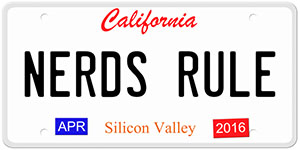 In addition to being extremely funny (for those who enjoy geek humor), HBO’s Silicon Valley also provides a useful education in intellectual property law.
Table of Contents
Spoiler Alert!
In the show’s first season, the character Richard launched a startup called Pied Piper, based on his invention of a lossless compression technology.
He made the code available to programmers at the rival fictional company Hooli — without any contractual protections.
Hooli then reverse-engineered the code and used it as the basis for its own competing software product, Nucleus.
To make things even worse, Hooli sued Pied Piper for “theft of intellectual property, unjust enrichment and a host of other trumped-up charges,” according to the Pied Piper blog.
Get Legal Help Today
Find the right lawyer for your legal issue.
Secured with SHA-256 Encryption
EULAs
End User License Agreements (EULAs) are the fine print (and usually electronic) documents with terms that most people agree to when they download or use software. Few people bother to read them.
Even when software is free, a EULA can limit the things that a user can do with it. For example, EULAs often contain restrictions on reverse engineering.
(Similar documents that can impose limitations on the use of software delivered via a Software as a Service (SaaS) model are often called Terms of Use or Terms of Service.)
If Richard had released Pied Piper with a EULA, he might have been able to use it to bring counterclaims against Hooli – or prevent their reverse engineering in the first place.
Works for Hire
Under the “work made for hire” doctrine, “a work prepared by an employee within the scope of his or her employment” is deemed to belong to the employer. In fact, the employer is deemed the “author” of the work under US copyright law.
Hooli alleged that Richard created the code while he was still employed by Hooli, making Hooli the owner of the intellectual property.
Pied Piper’s attorney Ron LaFlamme (a fellow Harvard Law School graduate) pointed out that Richard agreed in his employment agreement to assign all his inventions “conceived or reduced to practice” while he was employed by Hooli to the company.
This is a common clause in employment agreements – especially in the high-tech sector.
However, under California law an employer doesn’t necessarily own every thought that passes through an employee’s head.
Despite such an invention clause, an employer can’t necessarily claim ownership of an invention that the employee created on his or her own time, without using the company’s intellectual property (including its trade secrets), facilities, supplies, or equipment.
But there’s a further wrinkle: even if an employee doesn’t use anything that belongs to the employer, the employer may still be able to lay claim to the invention if it:
- relates to the employer’s business or anticipated research or development, or
- results from any work performed by the employee for the employer.
Based on what Richard told his lawyer, it looks like he’s got a good defense. But the lawsuit was enough to scare off investors, causing problems for the fictional startup.
If you have questions about intellectual property law in the employment context, you may wish to consult an IP attorney in your area.
Get Legal Help Today
Find the right lawyer for your legal issue.
Secured with SHA-256 Encryption
Editorial Guidelines: We are a free online resource for anyone interested in learning more about legal topics and insurance. Our goal is to be an objective, third-party resource for everything legal and insurance related. We update our site regularly, and all content is reviewed by experts.